Building a Retaining Wall
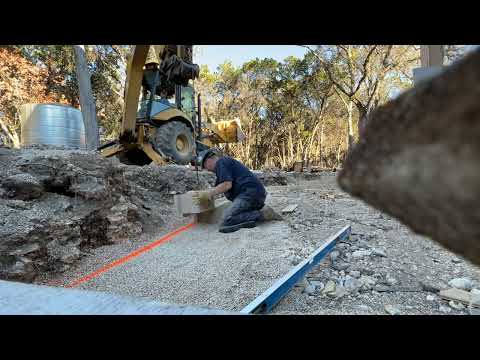
Welcome to HBA Construction, your trusted partner in building a retaining wall that stands the test of time. With over three decades of experience in construction and landscaping, we understand that your property deserves nothing but the best when it comes to retaining wall solutions.
Building a Retaining Wall: What You Need to Know
A retaining wall is a sturdy structure designed to hold back soil, preventing erosion and creating level surfaces in sloped areas. These walls are commonly used in landscaping, construction, and infrastructure projects to manage land elevation changes, stabilize hillsides, or add aesthetic appeal to outdoor spaces.
Retaining walls solve practical problems like erosion, water flow, and unusable slopes — and they can also add visual appeal, define planting areas, or create usable flat spaces in sloped yards.
On properties with slopes, soil naturally wants to move downhill over time. Beyond just simply preventing erosion, without intervention, this can also lead to:
- Water pooling or uncontrolled runoff
- Unstable planting areas
- Underused or inaccessible outdoor space
A well-designed retaining wall addresses these problems and provides a foundation for patios, gardens, or terraces
Types of Retaining Walls
There isn’t a single “best” retaining wall — the right type depends on height, soil conditions, drainage needs, site access, and how you want the finished space to look. Below are the most common wall types used in residential and landscape projects.
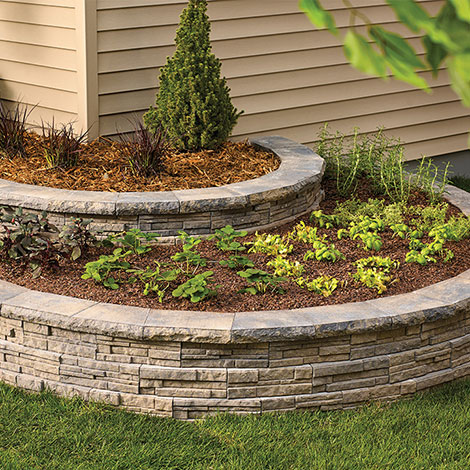
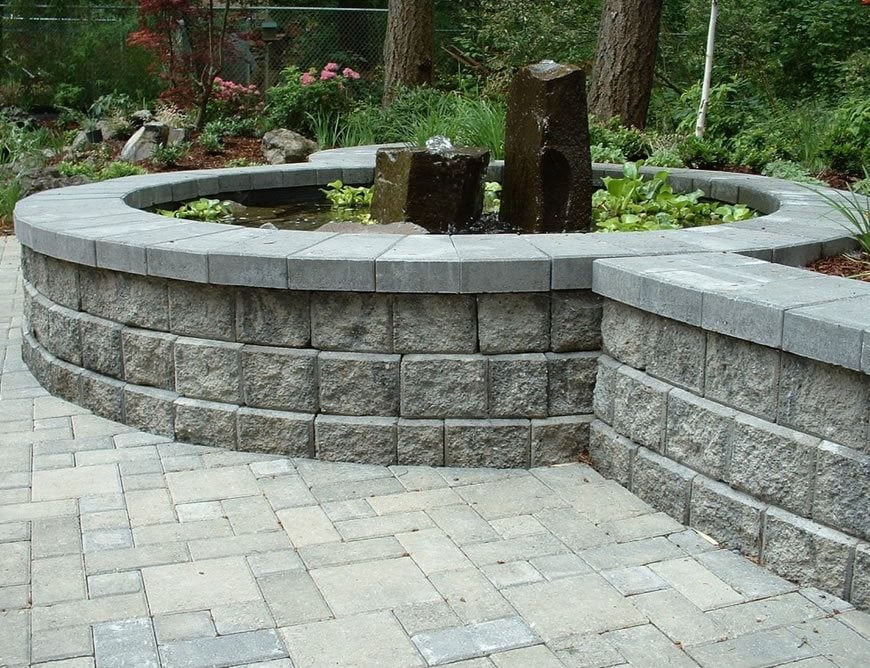
1. Block / Segmental Retaining Walls
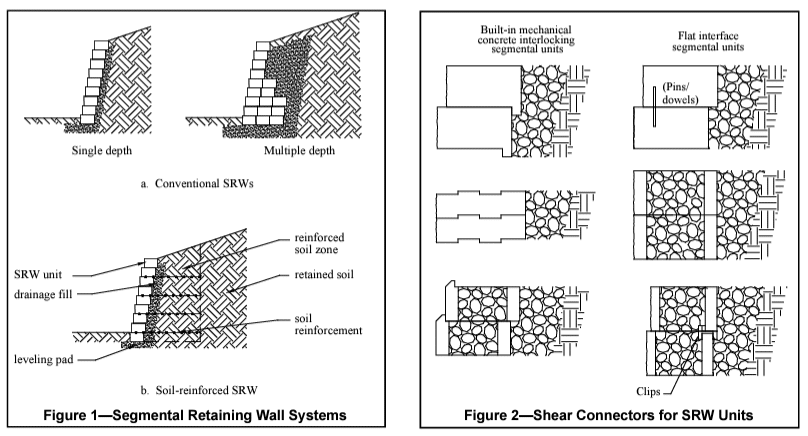
- Built from interlocking precast blocks that don’t require mortar.
- Can be simple gravity walls for shorter heights or reinforced with geogrid for higher loads.
- Excellent for garden terraces, flower beds, driveways, and backyard slopes.
- Often chosen because they are modular, durable, and relatively easy to integrate into landscaping.
📌 Best for: Residential landscapes, walls up to moderate height, decorative and functional uses.
 |
 |
 |
2. Gravity Walls
Gravity walls rely on their own weight — the mass of the material — to resist soil pressure.
- Common materials include stone, precast concrete, or heavy block.
- They are simple in design and ideal for shorter walls (generally under 3–4 feet).
📌 Best for: Small landscape walls, garden borders, low erosion control.
3. Cantilever Walls
Cantilever walls use a base slab and reinforced structure to counter soil forces.
- More engineered than gravity walls.
- Capable of supporting taller heights with less material.
📌 Best for: Higher walls and projects with significant elevation change.
4. Anchored Retaining Walls
These walls have anchors or cables driven into the soil behind the structure for additional support.
- Useful in tight spaces where a wide base isn’t practical.
- Anchors help resist stronger soil pressures.
📌 Best for: Tall walls in difficult sites, urban yards.
5. Gabion Walls
Gabions are wire baskets filled with stone.
- Flexible, permeable, and can blend with natural landscapes.
- Often visually striking and can double as seating or planting features.
📌 Best for: Erosion control, rugged landscapes, and rustic aesthetic projects.
6. Crib Walls
Crib walls are built from interlocking boxes (often timber or concrete) filled with stone or soil.
- They are gravity-type structures that allow drainage.
- Good for medium-height walls.
📌 Best for: Terraced gardens, driveway edges.
Materials Matter
Our expertise in building a retaining wall comes from years of hands-on experience and continuous learning about the latest construction techniques. We understand the unique challenges posed by Hill Country, Texas soil conditions and climate, and we design our solutions accordingly.
Different materials affect cost, appearance, and longevity:
- Natural stone — classic look, long lasting (higher cost)
- Concrete block — versatile and durable
- Timber — cost-effective but shorter lifespan
- Boulders — dramatic, natural aesthetic
Before we begin any project, we conduct a thorough site assessment to determine the best approach for your specific needs. This includes evaluating soil composition, drainage requirements, and structural considerations to ensure your retaining wall will be both functional and beautiful.
Our design process takes into account both the practical and aesthetic aspects of your project. We work closely with you to select materials and finishes that complement your property's existing architecture while ensuring structural integrity.
Drainage and Longevity
Proper drainage is essential regardless of wall type — water buildup behind the wall can create pressure that leads to failure. Including:
- Perforated drain pipes
- Gravel backfill
- Weep holes or drainage channels
How to Choose the Right Wall
Ask yourself:
- How high does the wall need to be?
- What is the soil like where the wall will go?
- Is the wall purely aesthetic or does it need structural strength?
- Will drainage or water flow be a concern?
Understanding these early helps guide the design and construction approach so the wall performs well and adds value to your landscape.
HBA Has You Covered
Drainage is a crucial factor in building a retaining wall, and we pay special attention to this aspect. Our systems are designed to prevent water buildup, which can lead to structural issues and premature deterioration.
Safety is paramount in every project we undertake. We strictly adhere to local building codes and obtain all necessary permits, ensuring your retaining wall meets or exceeds regulatory requirements.
Our project management approach keeps you informed throughout the construction process. We provide regular updates and are always available to answer your questions or address any concerns.
While some contractors might offer lower prices, we focus on delivering the highest value through superior workmanship and materials. Our retaining walls are built to last, saving you money in the long run by avoiding costly repairs or replacements.
We understand that building a retaining wall is a significant investment in your property. That's why we offer detailed proposals and transparent pricing, with no hidden costs or surprises.
Our team's expertise extends beyond just construction. We can help you understand the maintenance requirements for your new retaining wall and provide guidance on keeping it in optimal condition.
Every project we complete adds to our portfolio of satisfied clients in Canyon Lake and surrounding areas. We take pride in the positive feedback we receive and the referrals from happy homeowners.
Whether you need a small garden wall or a large-scale retaining structure, we have the experience and capabilities to handle projects of any size. Our versatility sets us apart from competitors who might specialize in only one type of construction.
Whether you need a small garden wall or a large-scale retaining structure, we have the experience and capabilities to handle projects of any size. Our versatility sets us apart from competitors who might specialize in only one type of construction.
We use innovative construction techniques and high-quality materials that ensure your retaining wall will maintain its structural integrity and appearance for years to come.
Our commitment to customer satisfaction doesn't end when the project is complete. We stand behind our work with comprehensive warranties and ongoing support.
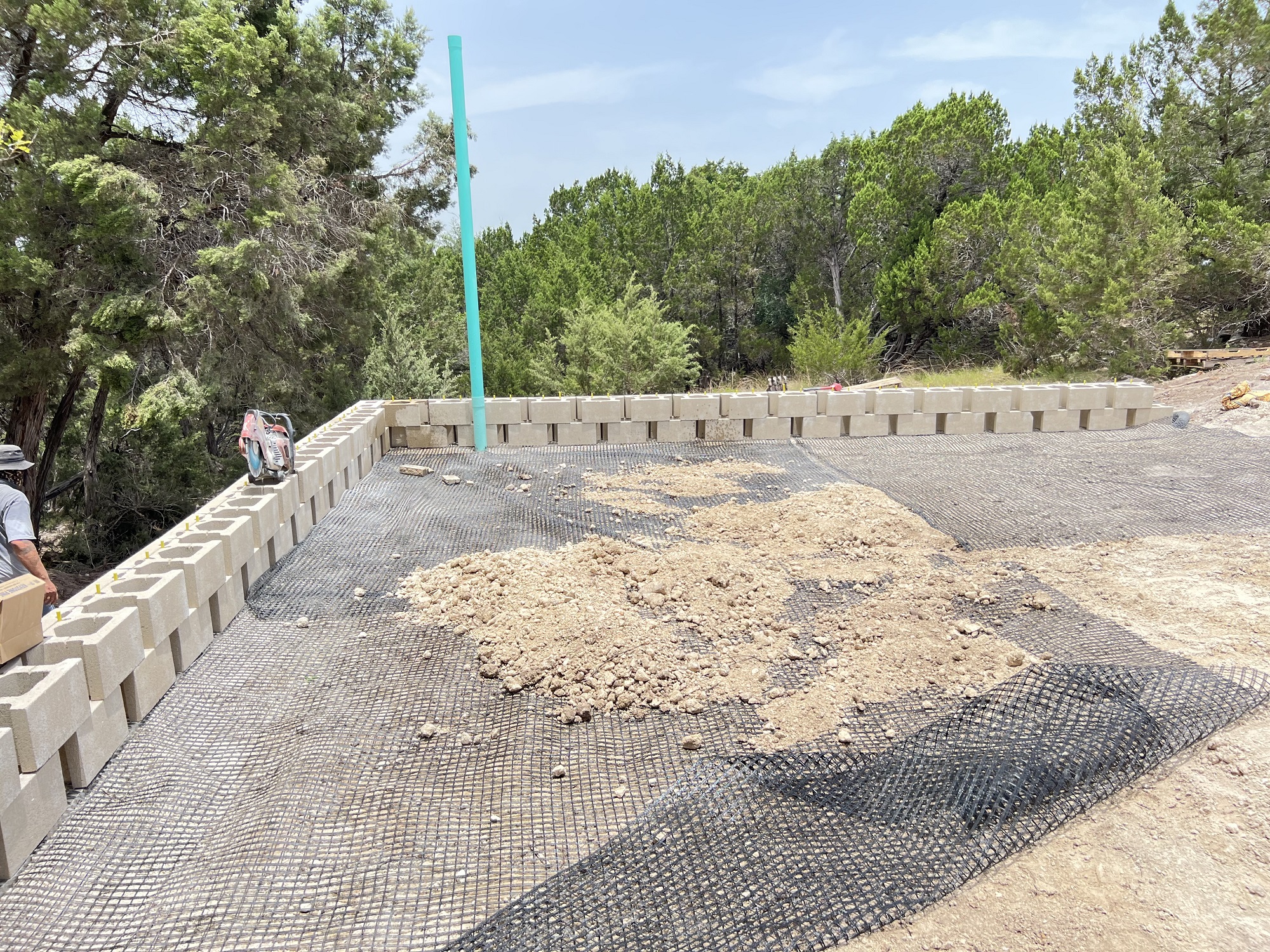
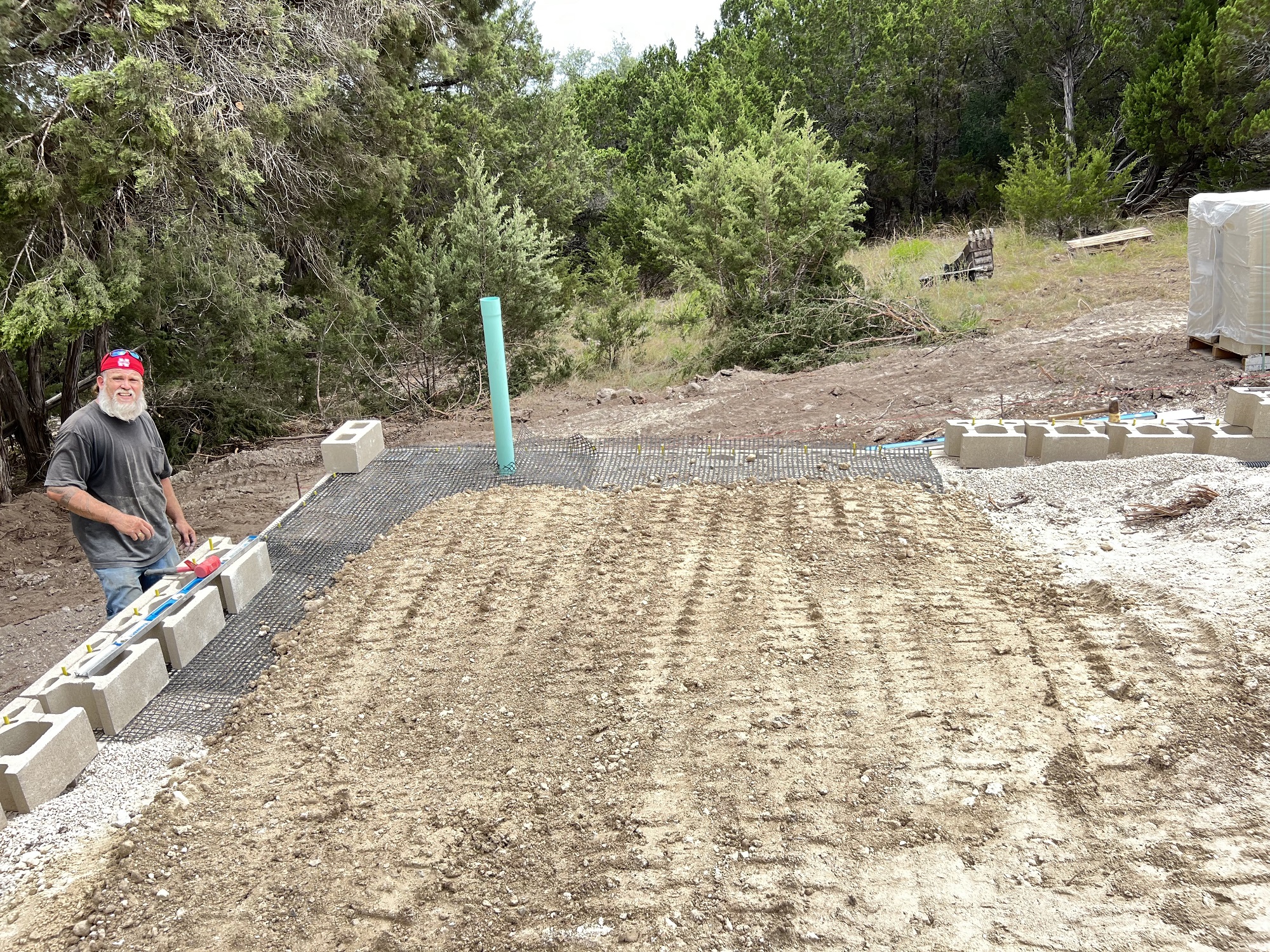
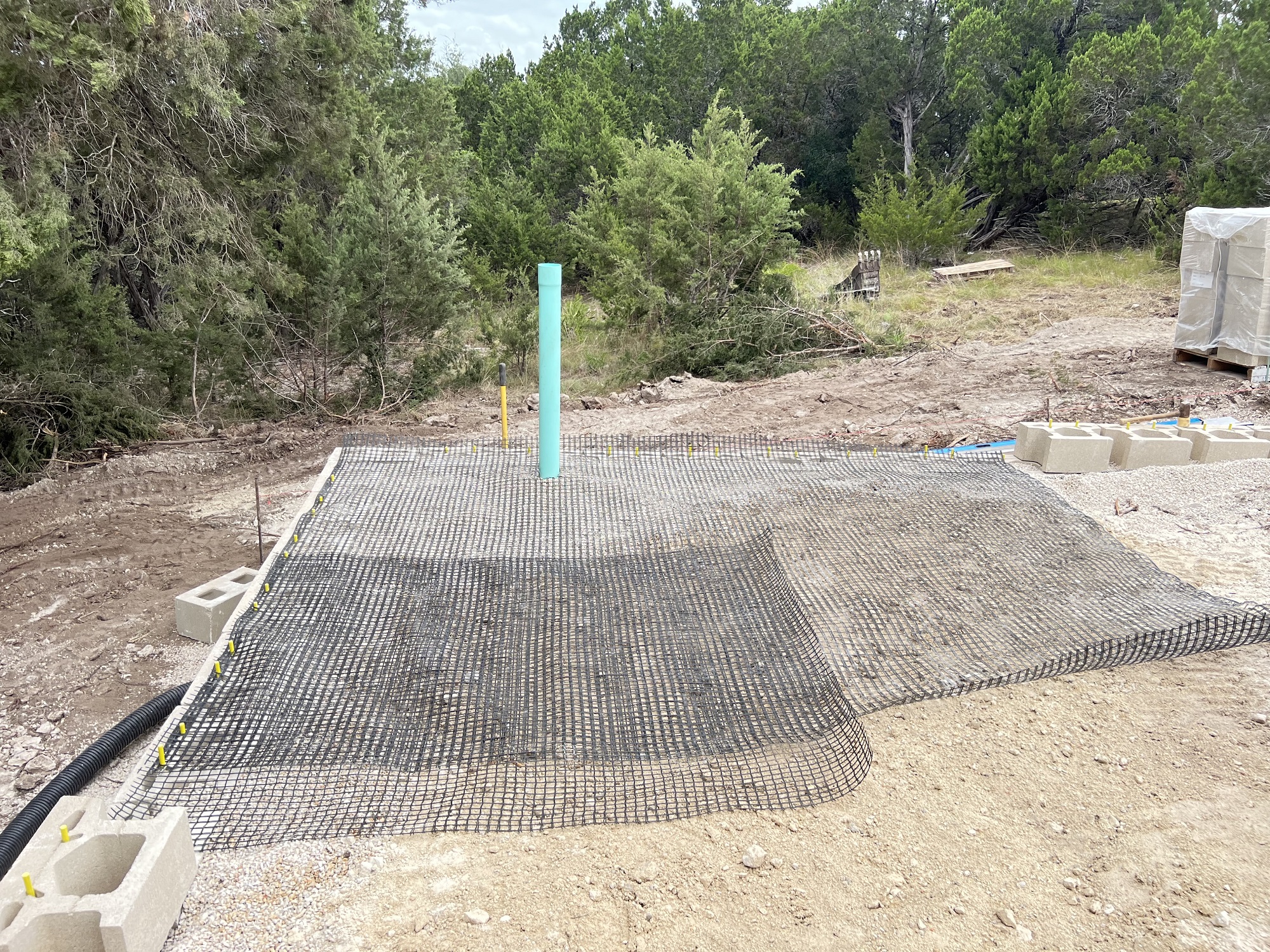
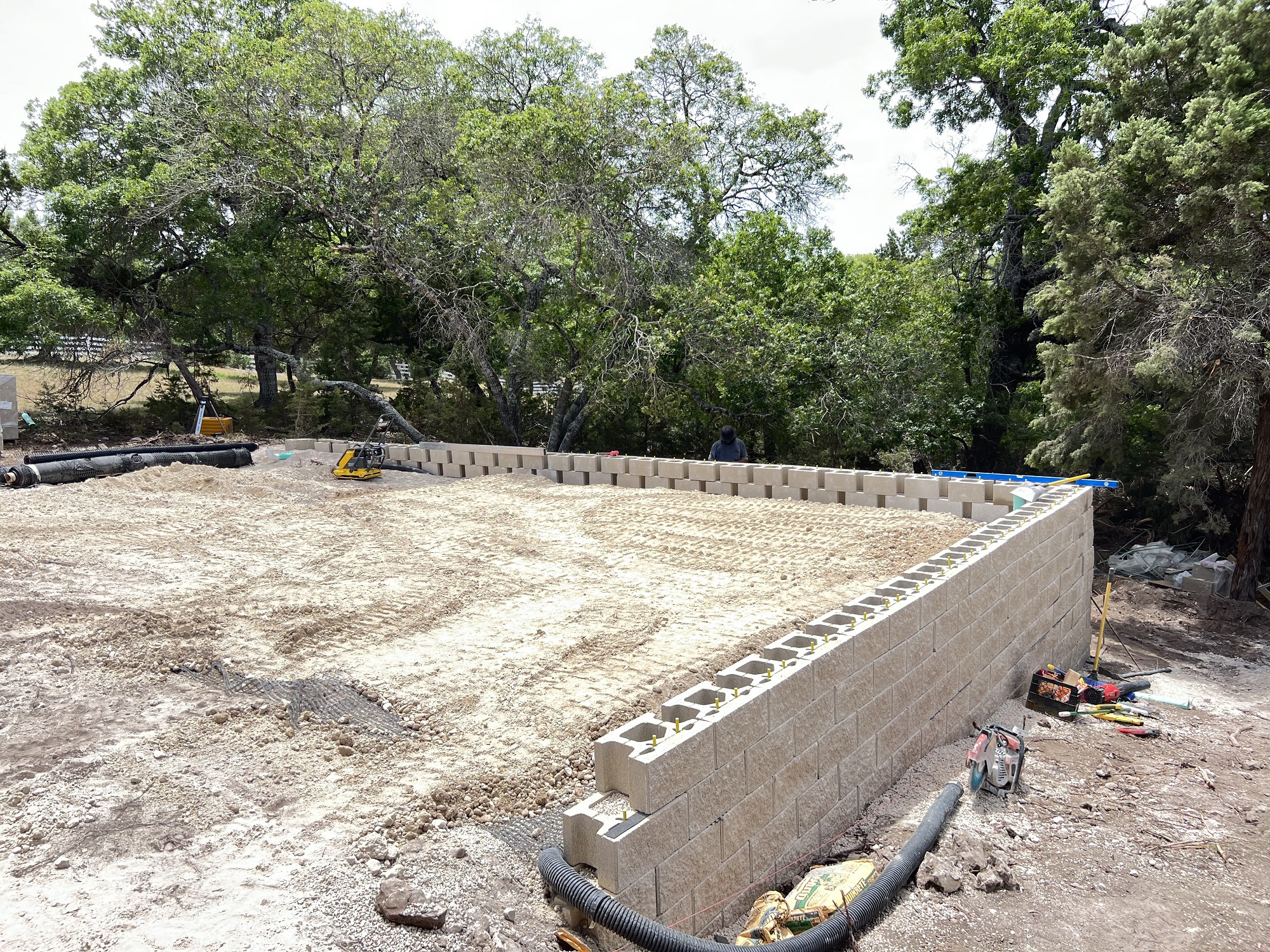
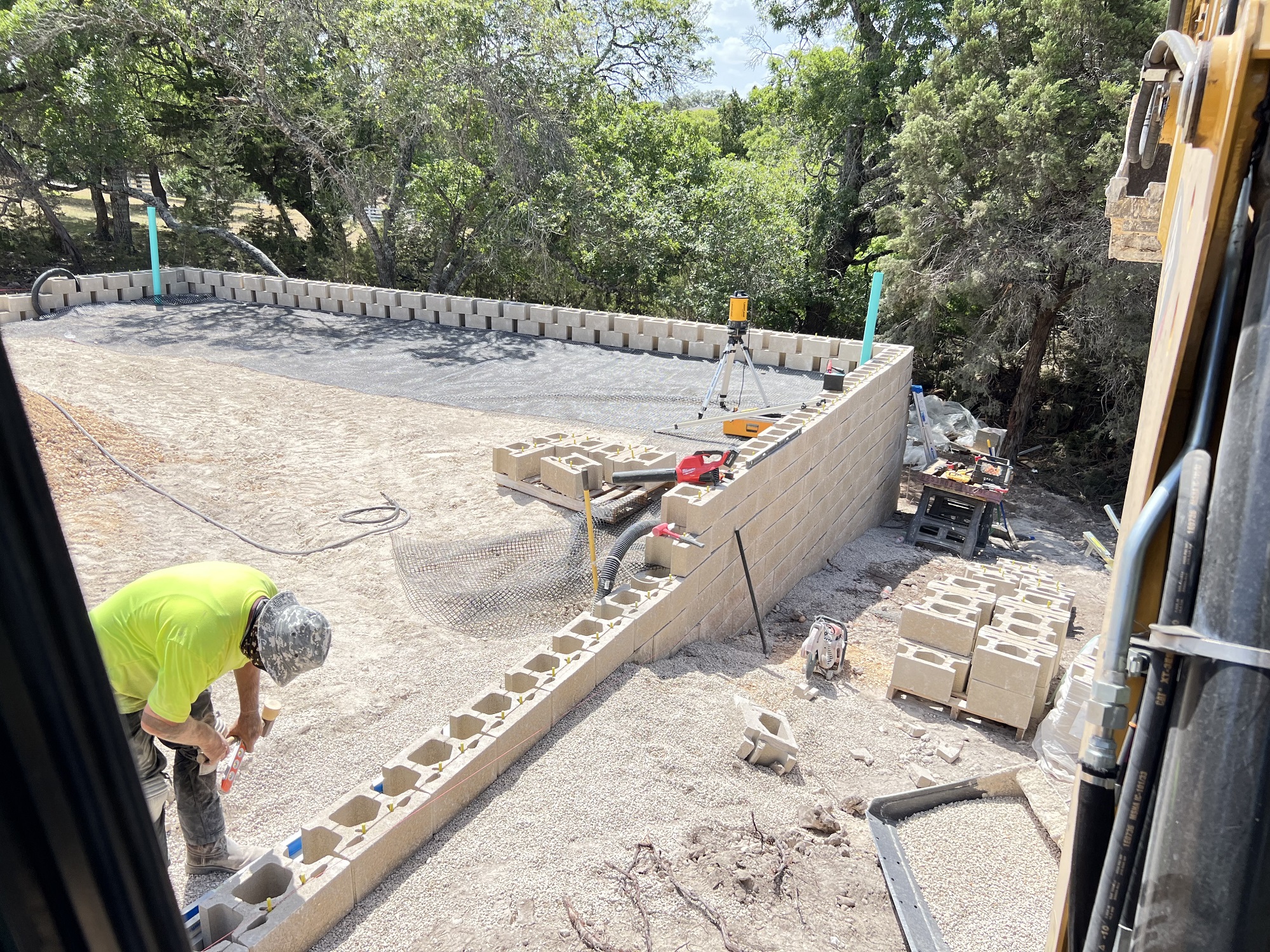
Building a Tall Block Retaining Wall for use as a Parking Space
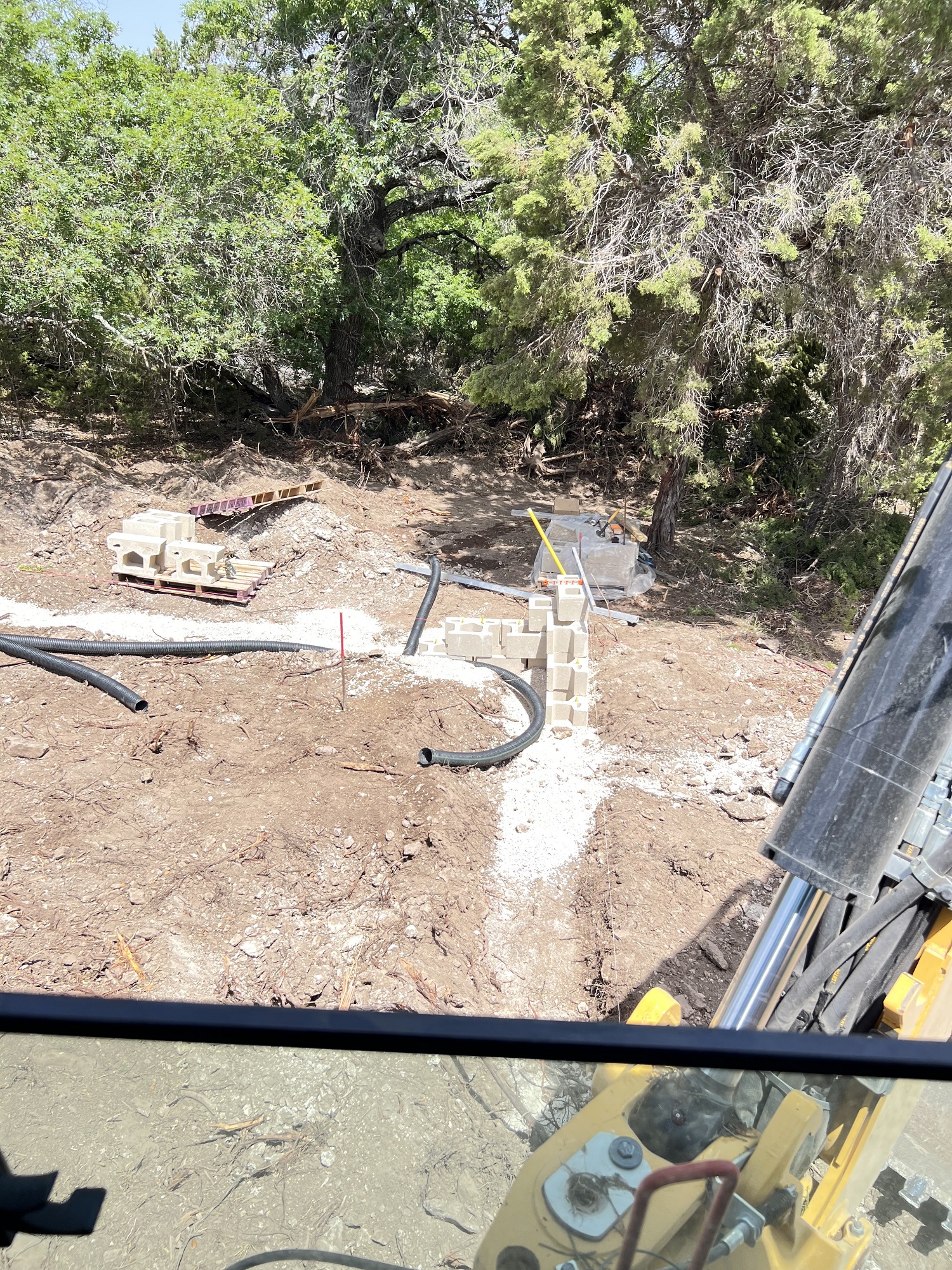
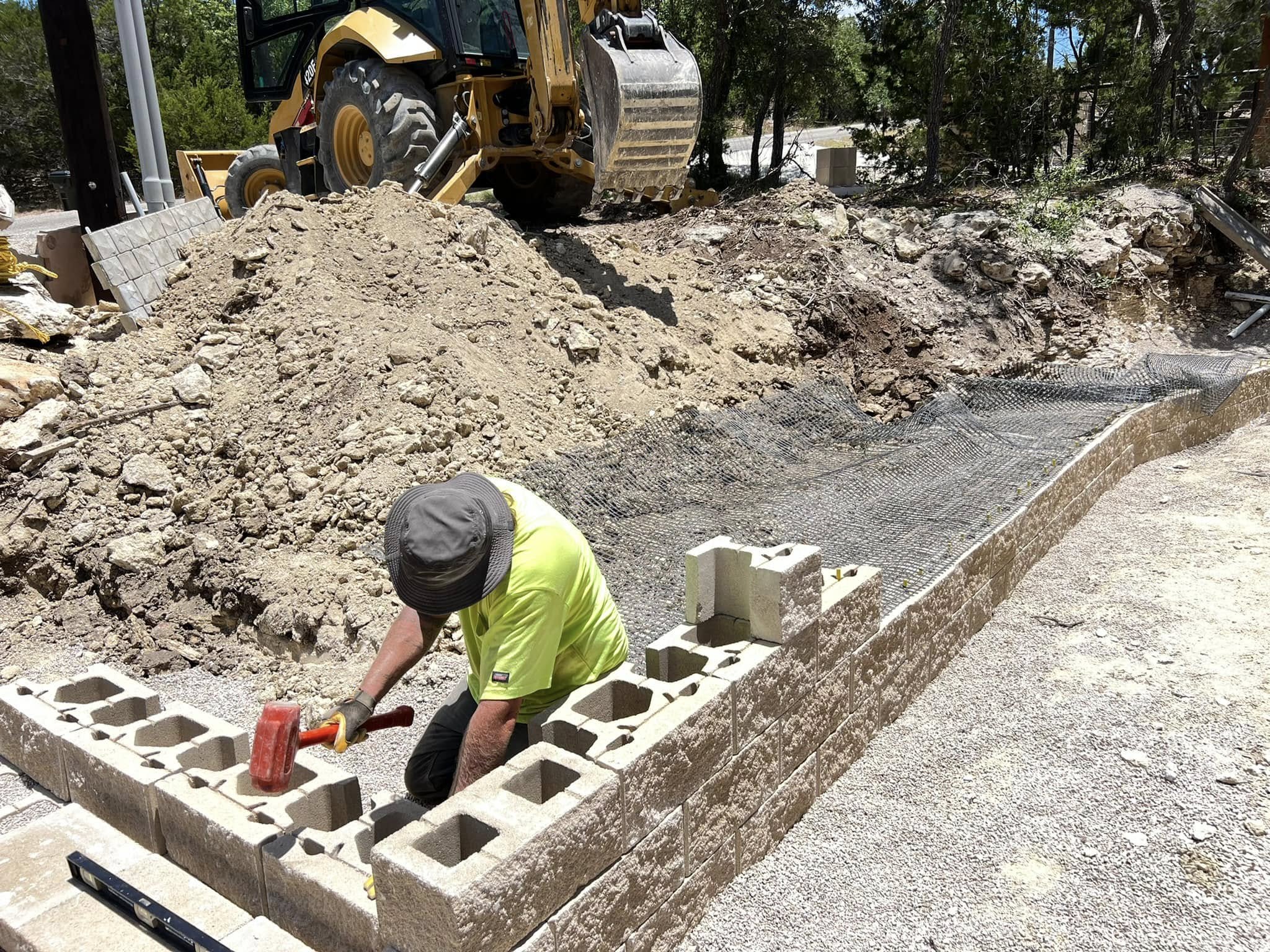
The wall pictured here is constructed using segmental blocks — a versatile and attractive option for many residential landscapes. They balance durability with visual appeal and can be designed to accommodate moderate to heavy loads when installed with proper backfill and reinforcement like geogrid.
We buy our high quality blocks in San Antonio. Ask for Dave!
Call us for your FREE
Property or Project Evaluation
(830) 507-5956
- (830) 507-5956
- Retaining Walls
Call today
(830) 507-5956
Email us:
dana@askhba.com
mailing address:
1015 twisted oak court
canyon lake, texas 78133