Excavation Services in the
Texas Hill Country
Welcome to an overview of residential excavation service. Whether you're planning to build your dream home, add a pool, or tackle a major landscaping project, understanding the basics of dirt excavation is crucial. As your trusted partner in construction, HBA Construction is here to walk you through everything you need to know about this essential first step in your property transformation journey.
Proper excavation is crucial for the long-term success of any construction project. Poor grading or inadequate soil preparation can lead to serious problems down the line, including drainage issues, foundation problems, and structural instability. HBA Construction will eliminate those worries for you.
What Excavation Is, When You Need It, and What to Expect
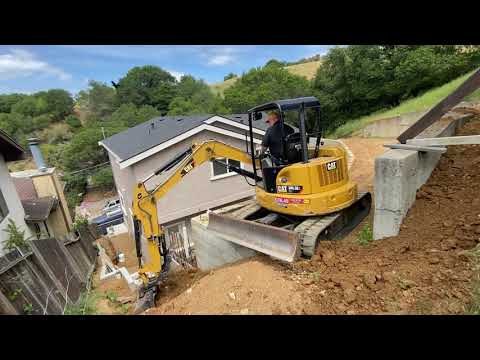
Excavation is the process of moving earth — cutting into the ground, removing soil and rock, and shaping the land to accommodate whatever is being built on or beneath it. It is one of the most fundamental services in construction, and it is involved in nearly every significant project a property owner undertakes: foundations, utilities, drainage systems, ponds, pools, driveways, retaining walls, and site preparation all begin with excavation.
In the Texas Hill Country, excavation is more demanding than in most regions. The combination of shallow limestone, caliche hardpan, rocky terrain, and significant elevation change means that excavation here requires the right equipment, experienced operators, and realistic planning around what the ground will and won't cooperate with.
HBA Construction provides excavation services across Canyon Lake, Bulverde, Spring Branch, New Braunfels, Wimberley, Boerne, Seguin, and the surrounding Texas Hill Country.
What Excavation Actually Involves
Excavation is not a single task — it covers a wide range of earth-moving work depending on the project. Understanding the type of excavation your project requires helps set realistic expectations for timeline, equipment, and cost.Topsoil Removal
The first step on most sites is stripping topsoil — the organic upper layer of soil — and stockpiling it separately from the subgrade material beneath. Topsoil is not suitable for use as structural fill under foundations or concrete flatwork because it compresses and decomposes over time. Separating and saving it allows it to be redistributed across the finished site for landscaping and erosion control after construction is complete.Cut and Fill Grading
Cut and fill is the process of excavating from high areas of a lot — the cut — and using that material to build up low areas — the fill. The goal is to create a usable, properly graded building pad or site without importing or exporting more material than necessary. In the Hill Country, where most lots have significant elevation change, cut and fill grading is the foundation of nearly every site preparation project.
The critical requirement in cut and fill work is compaction. Fill material placed without proper mechanical compaction will settle unevenly over time. A foundation, driveway, or concrete slab built on uncompacted fill will move — sometimes dramatically. Every lift of fill material must be compacted to the density required by the project before the next lift is added.Foundation Excavation
Excavating for a foundation involves removing soil and rock to the depth required by the foundation design — whether that is a shallow pad, a continuous perimeter footing, piers, or a deeper structural system. Foundation excavation in the Hill Country regularly encounters limestone shelf that must be broken before it can be removed.
The relationship between the foundation excavation depth and the rock conditions in the ground has a direct effect on foundation cost. Knowing what the ground contains before the foundation is designed saves money and prevents scheduling conflicts between the excavation contractor and the foundation crew.Utility Trenching
Water lines, electrical conduit, gas lines, sewer or septic connections, and irrigation systems all require trenches — narrow, precise excavations cut to a specified depth and alignment. Utility trenching in the Hill Country is frequently interrupted by rock, which requires a hydraulic hammer or specialty trenching equipment capable of cutting through caliche and limestone.
Trench depth requirements vary by utility type and by local code. Water lines must be buried below the frost depth. Gas lines have their own depth requirements. Electrical conduit depth depends on whether it is direct burial cable or conduit. Understanding these requirements before trenching begins prevents having to re-excavate.Pond and Water Feature Excavation
Ponds, stock tanks, water features, and swimming holes require large-volume excavation shaped to specific contours. Hill Country pond excavation often encounters the same rock conditions as other excavation work, and the depth and configuration of the finished pond must account for the rock layer to ensure the pond holds water effectively.
Pond placement on a property is as important as pond construction. We assess topography, drainage patterns, soil conditions, and intended use before recommending placement and design.Pool Excavation
Swimming pool excavation is precise work — the pool shell must be dug to exact dimensions and depths, and rock encountered during excavation must be broken and removed cleanly. Hill Country pool excavation almost always involves some rock breaking. The quantity of rock and the depth at which it appears affects both the timeline and cost of the excavation phase of a pool project.Drainage Excavation
French drains, drainage swales, detention basins, and culvert installations all require excavation. Drainage excavation in the Hill Country must account for rock depth, because the ideal depth for a French drain or drainage pipe is not always achievable when limestone is eighteen inches below the surface. Experienced excavation contractors adapt the drainage design to what the ground allows while still achieving effective water management.

Rock Breaking in the Texas Hill Country
No discussion of Hill Country excavation is complete without addressing rock — specifically caliche hardpan and limestone shelf, which are present on nearly every property in Comal, Hays, Kendall, and Bandera counties.
Rock breaking uses a hydraulic hammer — a heavy steel chisel driven by hydraulic pressure — mounted on an excavator. The hammer fractures the rock into pieces that can be moved by the excavator bucket, loaded into a dump truck, or redistributed on-site as fill or drainage aggregate.
Rock breaking is slower and more equipment-intensive than excavating in soft soil. A project that would take one day in sandy soil may take three days in solid limestone. This is not a reflection of inefficiency — it is the reality of working in Hill Country terrain, and any contractor who doesn't account for it in their timeline and pricing is either inexperienced with local conditions or not being straight with you.
Rock encountered during excavation can be:
Left in place where it does not interfere with the project — sometimes rock shelf at the bottom of an excavation provides an excellent natural bearing surface for a foundation.
Broken and redistributed on-site — crushed limestone and caliche make excellent road base, drainage aggregate, and fill material. Using rock broken on-site avoids the cost of importing base material.
Broken and hauled off — when rock volume exceeds what can be usefully incorporated into the project, it is loaded and removed from the site.
Equipment Used in Excavation
The right equipment for an excavation project depends on the scope of work, the terrain, and the access available on the site. The most common equipment used in residential and light commercial excavation includes:
Excavators — the primary tool for most excavation work. Excavators reach, dig, and place material with precision. With a hydraulic hammer attachment, they break rock. With a bucket attachment, they load trucks, shape grades, and dig trenches and foundations.
Bulldozers — most effective for moving large volumes of material across open areas. Dozers push and spread material efficiently and are the right tool for rough grading on larger sites.
Skid Steers — highly maneuverable machines suited to tighter spaces, finish grading work, and tasks where a larger machine would cause too much ground disturbance. Skid steers with bucket, auger, and other attachments handle a wide variety of tasks on residential sites.
Dump Trucks — excavation generates material that must go somewhere. Dump trucks move excavated soil and rock either to a different location on the same property or off-site to a disposal area. Haul-off volume is one of the most significant variables in excavation project cost.
Excavation FAQs
Q. How do I know if there is rock on my property before I start building?
A. A site assessment by an experienced excavation contractor familiar with local conditions is the most practical first step. Soil borings provide definitive information about subsurface conditions at specific locations but add cost. In the Hill Country, the practical approach is to assume rock is present at some depth on most properties and build contingency into the project budget and timeline accordingly. If you are purchasing land, a site assessment before closing can reveal conditions that affect your building costs significantly.
Q. Can excavated rock be used on-site instead of hauling it off?
A. Yes — and this is often the most cost-effective approach. Broken limestone and caliche make excellent road base for driveways and ranch roads, drainage aggregate for French drains and culverts, and fill material for raising low areas. Discussing on-site rock utilization during the planning phase can meaningfully reduce project cost.
Q. What is the difference between an excavator and a backhoe?
A. A backhoe has a digging bucket on the rear and a loader bucket on the front, mounted on a wheeled tractor frame. It is versatile and maneuverable on paved or improved surfaces but has limitations in reach and digging force compared to a dedicated excavator. An excavator is a tracked machine with a long boom and arm, designed specifically for digging. It has greater reach, more digging force, and better stability on slopes and rough terrain. For most Hill Country excavation work — particularly work involving rock — an excavator is the more capable tool.
Q. How deep can you excavate?
A. That depends on the equipment, the soil and rock conditions, and the safety requirements for the excavation. OSHA requires shoring or sloping of excavation walls beyond certain depths to prevent cave-in. Most residential excavation — foundations, utilities, drainage — falls within depths where standard equipment and safe working practices are straightforward. Deeper excavations require additional planning.
Q. Do I need a permit for excavation in Comal County?
A. In most unincorporated areas of Comal County, excavation for residential construction does not require a standalone excavation permit — it is typically covered under the building permit for the structure being built. Excavation near waterways, within a FEMA floodplain, or within city limits may require additional review. We can help you identify what applies to your specific project and location.
Q. What happens to the excavated material?
A. It depends on the material and the project. Topsoil is typically stockpiled and reused for finish grading and landscaping. Subsoil and rock may be redistributed on-site, used as road base or fill, or hauled off if volume exceeds what the project can absorb. Haul-off cost — equipment time, truck trips, and disposal — is a real line item in excavation projects and should be discussed during the planning phase.
Q. How much does excavation cost in Texas?
A. Excavation is priced based on volume of material moved, rock conditions, equipment required, haul-off volume, and project complexity. It is one of the most variable cost items in construction precisely because subsurface conditions vary so much across the Hill Country. There is no meaningful per-square-foot or per-cubic-yard estimate that applies across different sites. The only accurate way to price excavation is a site visit. Call (830) 507-5956 for a free property evaluation.
What to Expect When You Work With HBA Construction
Excavation projects start with a site walk and an honest conversation about what the ground is likely to contain, what equipment is appropriate, and what the realistic timeline looks like given the terrain. We don't quote excavation projects from satellite images or phone conversations — Hill Country ground conditions vary too much for that to produce a number you can rely on.
We use our own equipment and our own operators. When rock is encountered, we have the hammer attachment to deal with it without stopping the project to subcontract the work. When material needs to leave the property, we have our own dump trucks.
We serve Canyon Lake, Bulverde, Spring Branch, New Braunfels, Wimberley, Boerne, Seguin, San Marcos, and the surrounding Texas Hill Country.
Call (830) 507-5956 for your free property evaluation.
Call us for your FREE
Property or Project Evaluation
(830) 507-5956
- (830) 507-5956
- Excavation

Call today
(830) 507-5956
Email us:
dana@askhba.com
mailing address:
1015 twisted oak court
canyon lake, texas 78133